


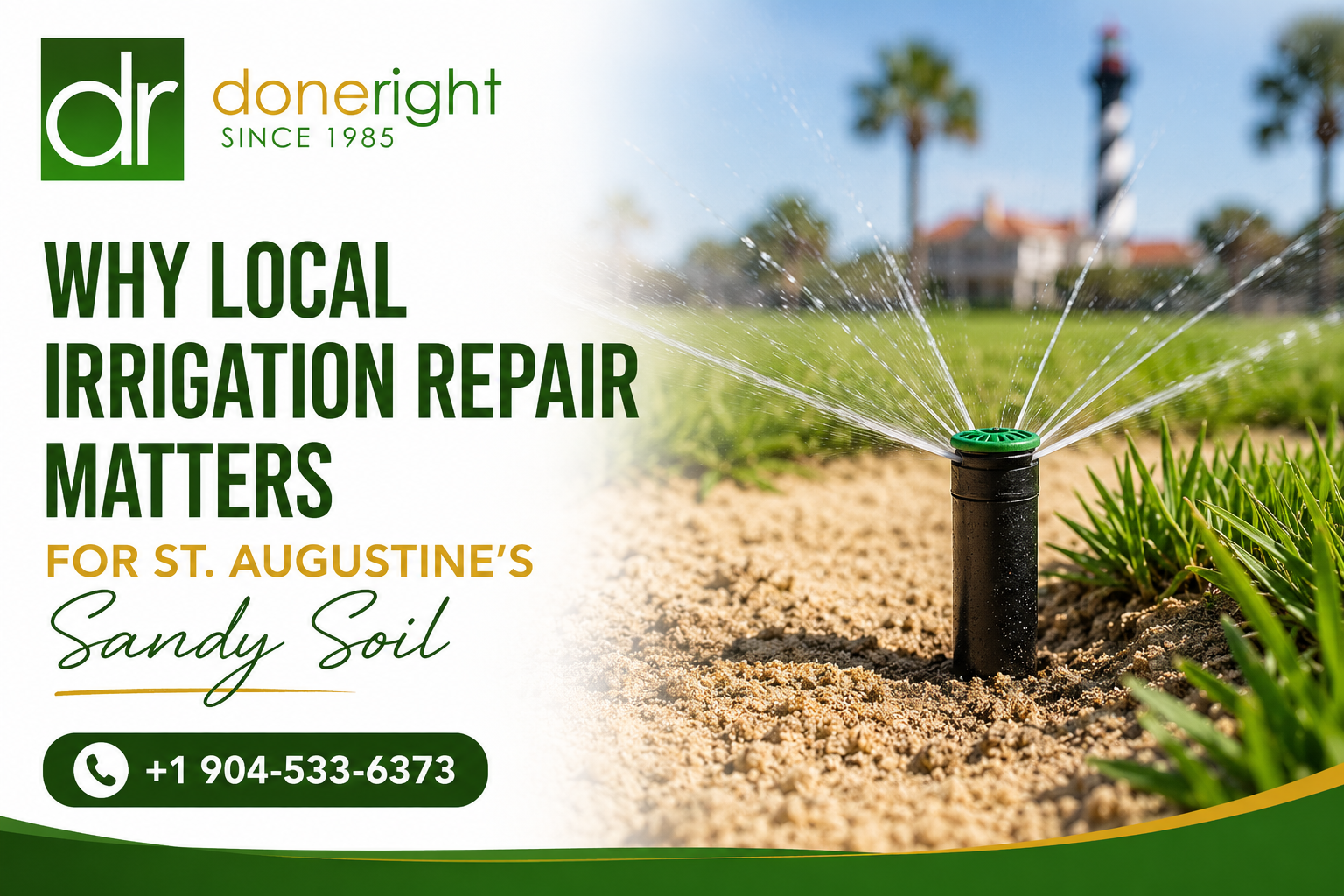
If you’ve ever watched water disappear into your lawn within seconds of your sprinklers kicking on, you’ve experienced firsthand what makes irrigation in St. Augustine so different from other parts of Florida and the country. Our soil is sandy, fast-draining, and unforgiving when it comes to irrigation mistakes. A poorly designed or malfunctioning system doesn’t just waste water; it can quietly destroy your lawn, landscaping, and even your wallet over time.
This is why working with a company that understands local conditions matters so much. Generic advice or a one-size-fits-all repair approach simply doesn’t hold up against St. Augustine’s unique terrain. In this post, we’ll break down why sandy soil changes the irrigation equation, the most common problems homeowners face, and why timely irrigation repair St. Augustine homeowners can trust, makes all the difference.
Understanding St. Augustine’s Sandy Soil
St. Augustine sits along Florida’s coastal plain, and much of the soil here is composed of sand with very little organic material. While sandy soil has its benefits, good drainage, less compaction, and easier root growth for certain plants, it also creates challenges that directly affect how irrigation systems function.
Sandy soil drains water much faster than clay or loam. Water that would sit in heavier soils for hours can pass through sandy ground in minutes. This means your irrigation system has less margin for error. If a zone runs too long, water doesn’t pool on the surface; it simply vanishes below the root zone, taking nutrients with it. If a zone doesn’t run long enough, your grass and plants can dry out before the next watering cycle even begins.
This delicate balance is exactly why irrigation systems in St. Augustine need more frequent monitoring and more precise calibration than systems in other regions.
How Sandy Soil Affects Irrigation System Performance
1. Faster Nutrient Leaching
When water moves quickly through sandy soil, it carries fertilizers, micronutrients, and organic matter down past the root zone, where plants can no longer access them. An irrigation system that’s overwatering, even slightly, can accelerate this process, leaving your lawn nutrient-starved despite regular fertilization.
2. Increased Risk of Underground Pipe Shifting
Sandy soil doesn’t hold its shape the way denser soils do. Over time, foot traffic, vehicle weight, or even heavy rainfall can cause shifting underground, which puts stress on irrigation lines and connectors. This is one of the leading causes of underground leaks that go unnoticed for weeks because the water simply drains away without surfacing.
3. Sprinkler Heads Sinking or Tilting
Because sandy soil shifts more easily, sprinkler heads can gradually sink, tilt, or become misaligned. A head that once delivered even coverage may start spraying onto sidewalks, driveways, or neighboring properties, wasting water and missing the areas that actually need it.
4. Inconsistent Water Distribution
Sandy soil’s drainage speed varies depending on grading, compaction, and even the presence of tree roots. This means two zones with identical sprinkler heads and run times can produce very different results. Without regular adjustments, some areas of your lawn may thrive while others struggle.
Common Irrigation Problems We See in St. Augustine Homes
Living and working in this area, certain issues come up again and again:
- Brown patches despite regular watering – Often a sign that water is draining too quickly before roots can absorb it, or that a zone’s coverage has shifted.
- Soggy spots near sprinkler heads – Usually indicates a cracked head, a loose connection, or a head sitting too low after soil settling.
- Higher-than-normal water bills – A strong indicator of an underground leak that sandy soil is masking by absorbing the excess water quickly.
- Uneven grass growth – Caused by inconsistent coverage due to clogged nozzles, misaligned heads, or pressure issues unique to sandy terrain.
- Controller settings that “used to work” but don’t anymore – As soil conditions change seasonally, the same watering schedule can produce very different results throughout the year.
Each of these issues might seem minor on its own, but left unaddressed, they compound, leading to dead patches, root damage, and costly landscaping replacement.
Why Local Expertise Makes the Difference
This is where the importance of choosing a knowledgeable irrigation repair company in St. Augustine becomes clear. A technician unfamiliar with the area might diagnose a problem using general best practices that work fine in clay-heavy regions but fall short here.
For example, a national average watering schedule might recommend 20-minute cycles per zone. In St. Augustine’s sandy soil, that same schedule could either be far too long (wasting water and leaching nutrients) or too short (leaving roots dry), depending on the specific yard’s grading and sun exposure.
Local technicians who regularly work with sandy soil conditions know how to:
- Calibrate run times based on soil drainage rates specific to your property
- Identify early signs of pipe shifting before they become major leaks
- Recommend sprinkler head types and spacing suited for fast-draining soil
- Adjust seasonal schedules to account for St. Augustine’s rainy season and dry months
- Spot drainage-related damage that might be mistaken for pest or disease issues
This local knowledge isn’t something that can be replicated by following a generic repair manual. It comes from years of working with the same soil conditions, weather patterns, and landscaping challenges that are unique to this part of Florida.
The Cost of Delaying Irrigation Repairs
Because sandy soil hides problems so effectively — water disappears instead of pooling — many homeowners don’t realize there’s an issue until the damage is visible above ground. By the time brown patches or dead zones appear, the underlying problem may have been ongoing for weeks or even months.
Delayed repairs can lead to:
- Higher water bills from undetected leaks
- Costly lawn replacement due to root damage
- Soil erosion in areas with excessive runoff
- Foundation or hardscape issues from water pooling near structures
- Increased pest activity in overly moist or overly dry zones
Addressing irrigation repair St. Augustine homeowners need promptly isn’t just about lawn aesthetics; it’s about protecting your property’s long-term health and avoiding expenses that grow the longer they’re ignored.
What to Look for When Choosing an Irrigation Repair Company in St. Augustine
When selecting a provider, consider asking:
- Do they have experience specifically with sandy soil conditions in this region?
- Can they explain how soil type affects your system’s design and schedule?
- Do they offer seasonal adjustments based on local rainfall patterns?
- Are they familiar with local water restrictions and regulations?
- Do they provide thorough diagnostics rather than just replacing parts?
A company with deep local roots will be able to answer these questions confidently and tailor their recommendations to your specific property — not just apply a generic fix.
Final Thoughts
St. Augustine’s sandy soil is part of what makes this area beautiful, lush greenery, vibrant landscaping, and a coastal feel that’s hard to replicate elsewhere. But maintaining that beauty requires an irrigation system that’s properly calibrated for the ground beneath it.
Whether you’re dealing with brown patches, rising water bills, or a system that just doesn’t seem to perform the way it used to, the solution often comes down to understanding how sandy soil interacts with your irrigation setup. Partnering with a team that specializes in irrigation repair in this region ensures your system is working with your soil, not against it, saving you money, protecting your landscaping, and keeping your lawn healthy through every season.